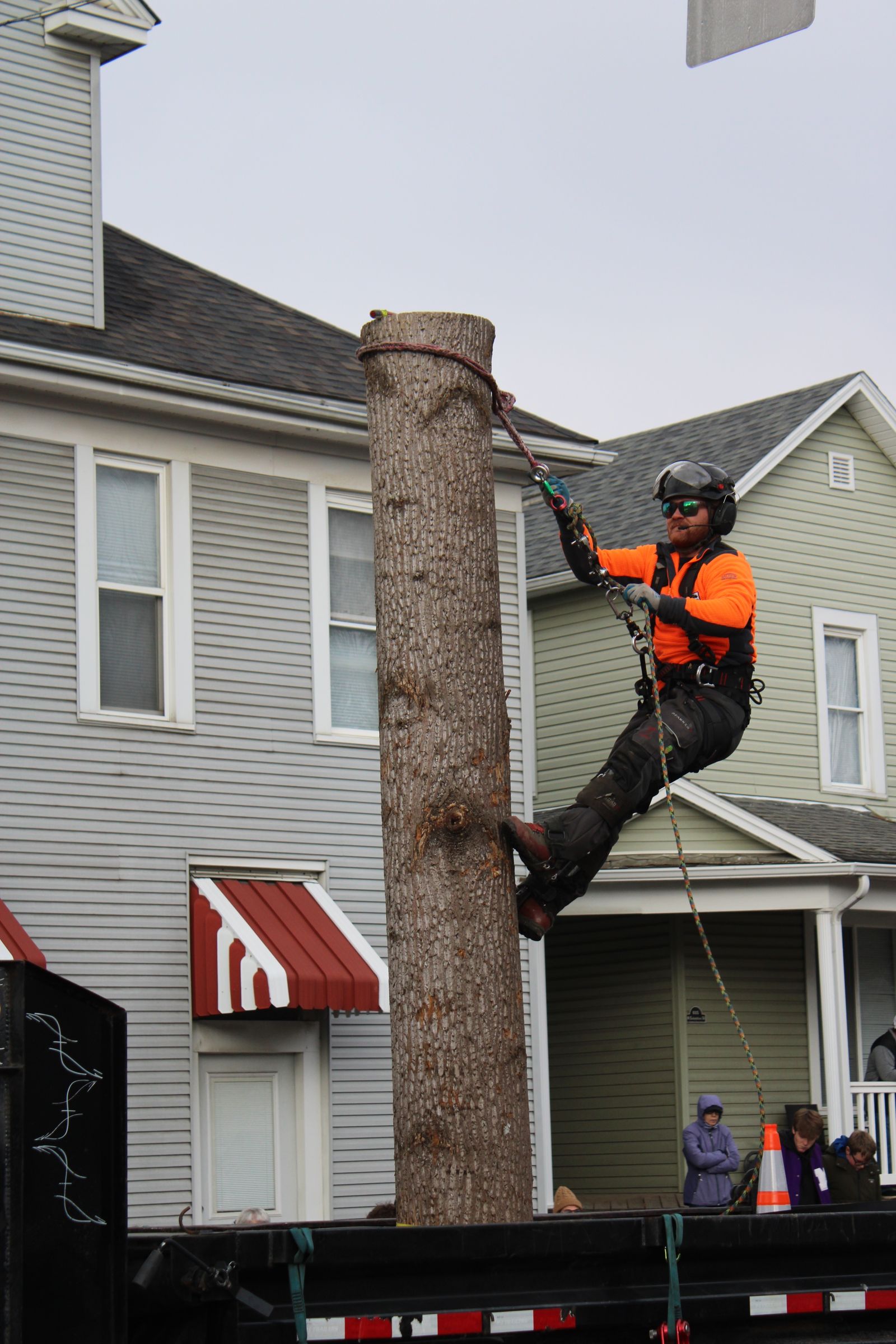
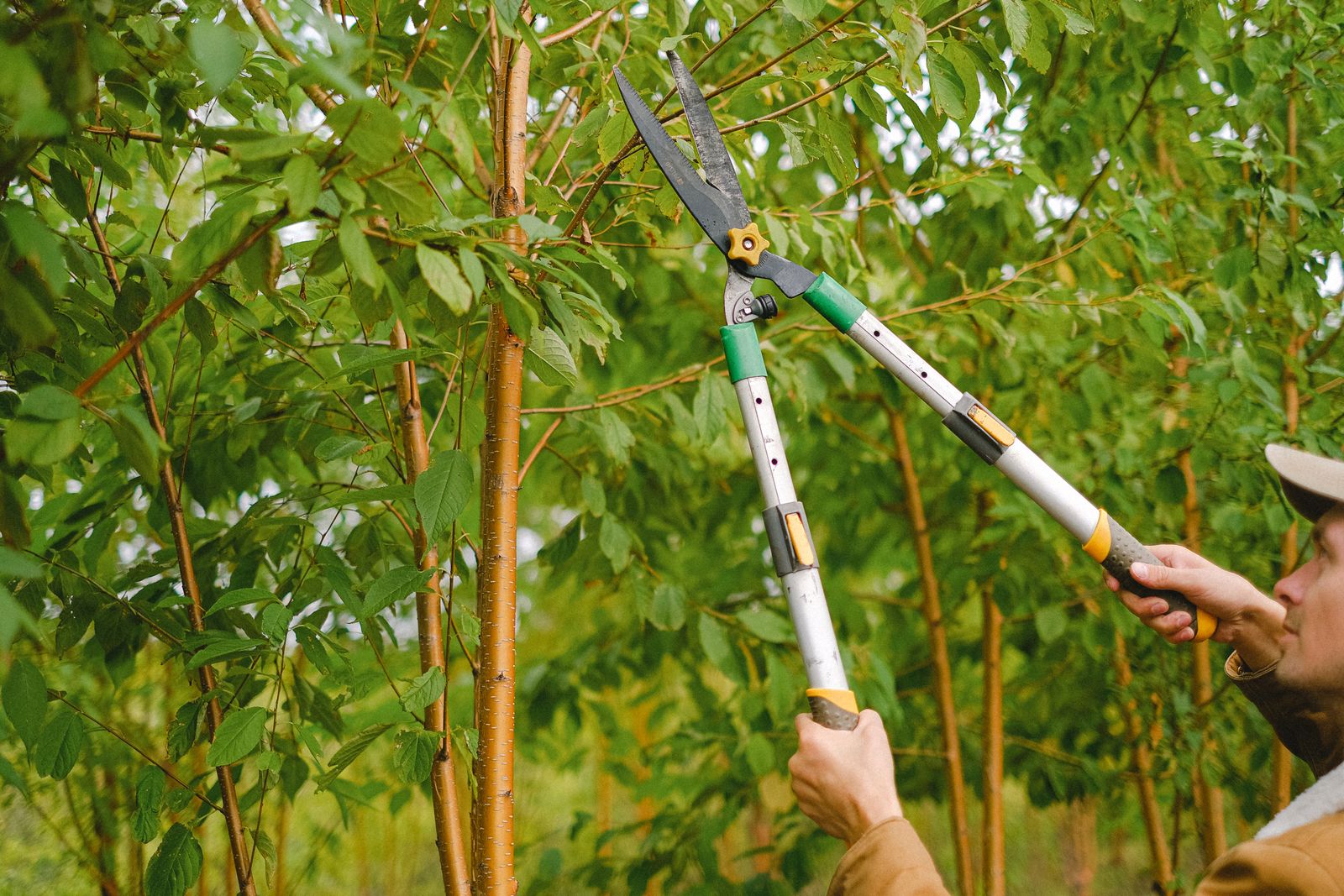
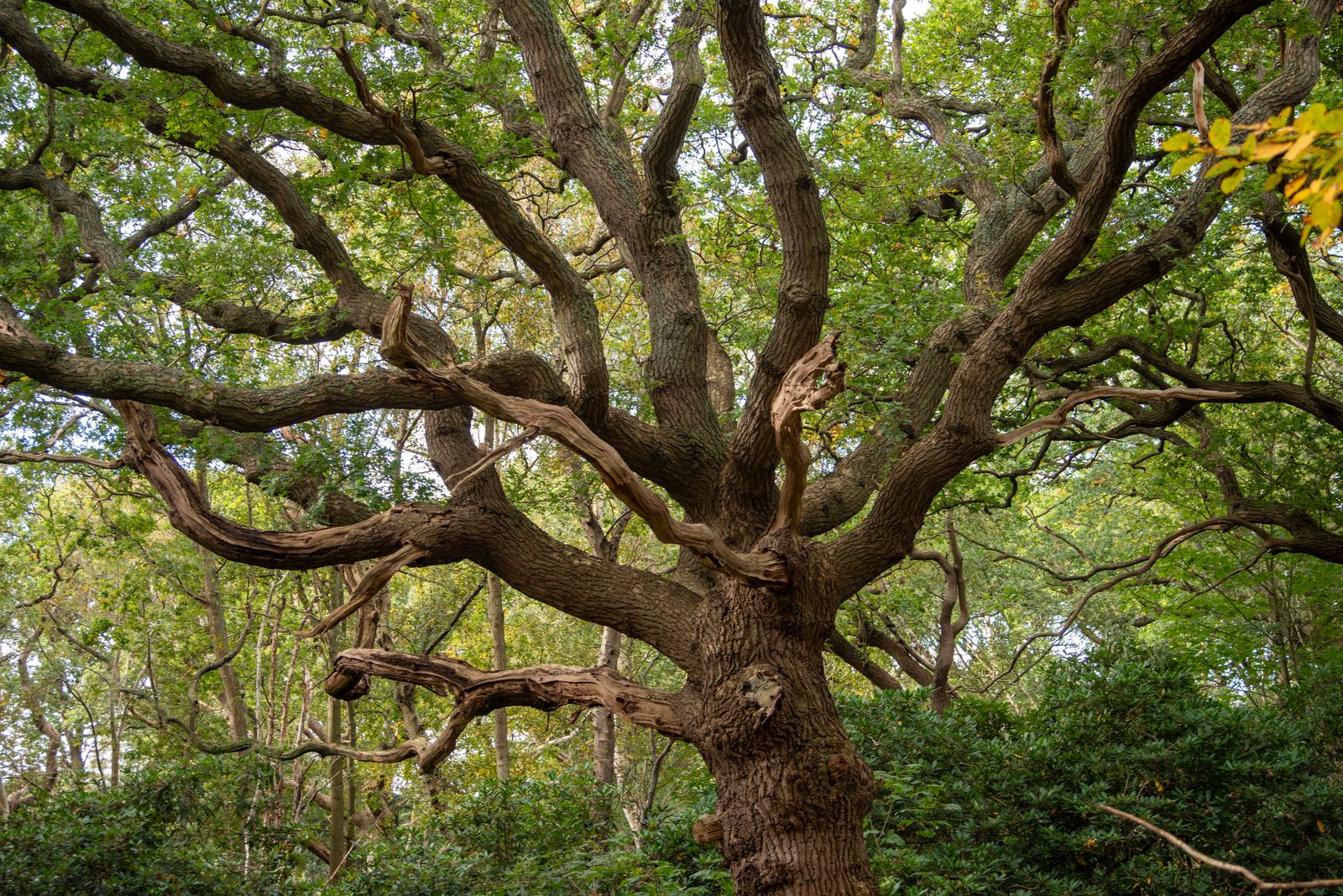
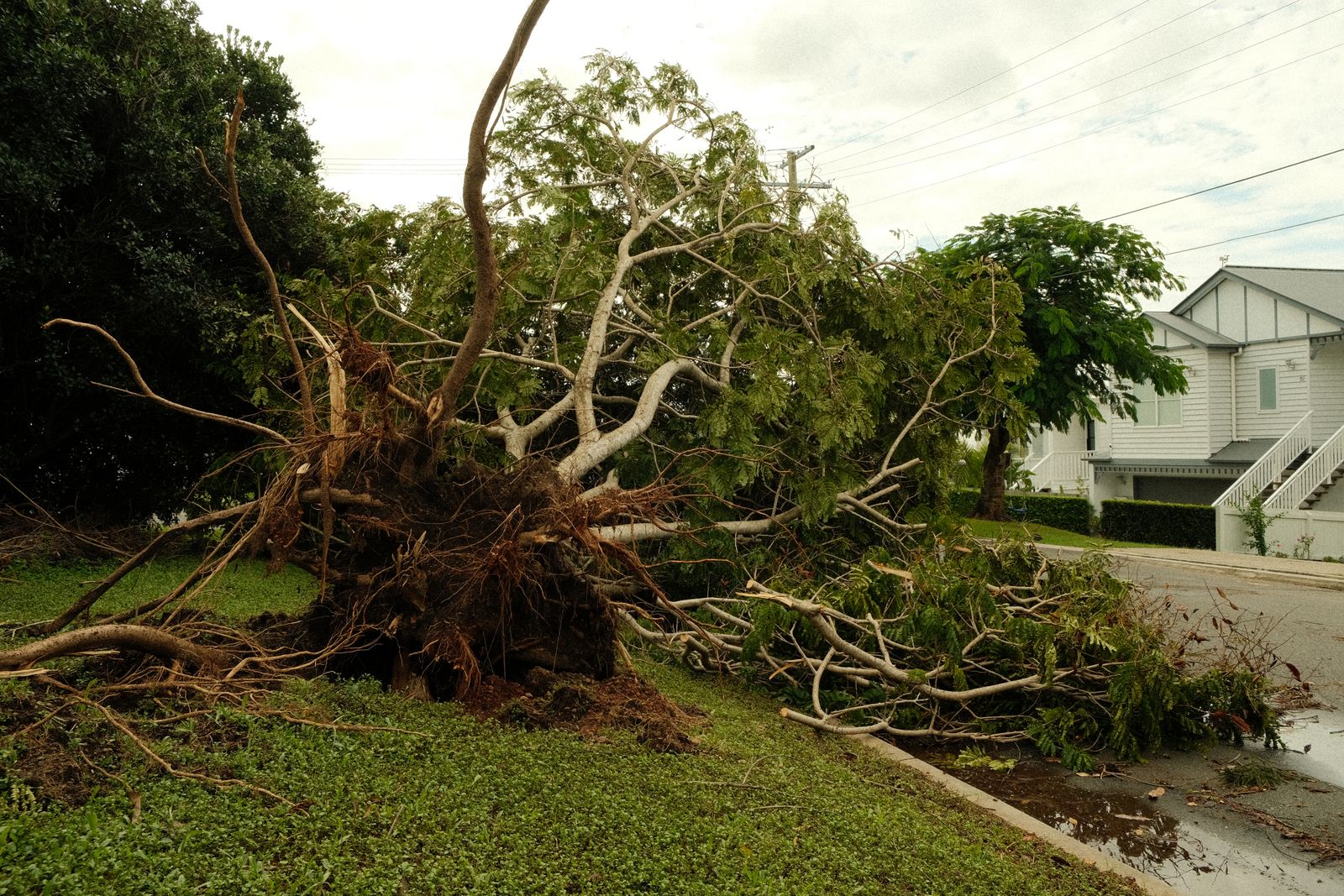
A climber on a white oak in Montford. Every job starts with someone in the tree, looking.Cleaning: selective removal of dead, dying, diseased and broken branches.Thinning: selective removal of live branches to reduce density.Raising: providing vertical clearance over drives, walks, roofs and sight lines.Reduction: decreasing height or spread, usually to reduce end weight or clear a structure.Restoration: improving structure in a tree that was topped, storm broken or long neglected.Structural: establishing a single dominant leader and well-spaced scaffold limbs while a tree is young.
Asheville arborists since 2009
Tree care that thinks in decades, not days.
ISA certified arborists who prune to standard, assess risk to a published method, save what can be saved and remove the rest with care across the Blue Ridge.
ISA Board Certified Master Arborist on every estimate
TRAQ qualified risk assessors
TCIA accredited company
A native tree planted for every removal
A300 Part 1
Six pruning types, and what each one is allowed to do.
Every estimate we write names the pruning type, the objective and the dose. "Trim the tree" is not a specification. These are the types defined in the ANSI A300 Part 1 standard, in the words we use on paper.
Standard
A300 Part 1, 5.6.1. Specified by minimum branch diameter, commonly 1 in. and larger in the outer crown.
Dose limit
No live-wood limit, because nothing living is removed
Cut used
Removal cut just outside the branch collar, never flush to the stem
Where it goes wrong
Calling a cleaning a thinning, then billing for live wood that did not need to go
Standard
A300 Part 1, 5.6.2. Distributed through the outer third of the crown, not stripped from the interior.
Dose limit
Rarely more than 20 to 25 percent of live foliage in a season, and less on mature trees
Cut used
Removal cuts back to the parent stem or to a lateral at least one third the diameter of the cut
Where it goes wrong
Lion-tailing: stripping interior foliage and leaving weight on the ends, which raises failure risk
Standard
A300 Part 1, 5.6.3. Specified as a clearance height, for example 14 ft over a driveway.
Dose limit
Keep the live crown ratio at 60 percent or better on young trees; stop before the trunk is bare
Cut used
Reduction or removal of low limbs, working up the stem in stages across seasons
Where it goes wrong
Raising a young street tree in one visit, leaving a bare pole with a tuft on top
Standard
A300 Part 1, 5.6.4. Specified in feet of reduction, not as a percentage of the tree.
Dose limit
Reduce to a lateral at least one third the diameter of the stem being cut
Cut used
Reduction cut to a suitable lateral, angled to keep the branch bark ridge intact
Where it goes wrong
Topping. Heading cuts to stubs are not reduction, and the response growth is weakly attached
Standard
A300 Part 1, 5.6.5. Written as a multi-visit plan, typically three visits over five to seven years.
Dose limit
Select one to three sprouts per stub per visit; remove the rest gradually, not all at once
Cut used
Removal of surplus sprouts, plus reduction of the retained leaders to slow regrowth
Where it goes wrong
Trying to fix a topped tree in a single visit, which starves it and triggers more sprouting
Standard
A300 Part 1, 5.6.6. Best done on a two to three year cycle from planting until about 25 ft.
Dose limit
Subordinate competing leaders by reducing them, rather than removing them outright
Cut used
Reduction of codominant stems to restore a clear central leader
Where it goes wrong
Waiting. A competing leader is a five-minute fix at 2 in. and a cabling job at 20 in.
When a species can be cut, and what is waiting for the wound.
Pruning windows are not preference. A fresh cut on a red oak in May is an invitation to a beetle carrying oak wilt spores. We schedule by species, not by whoever called first.
Pruning windows and disease vectors by species
Species
Prune
Avoid
Vector to keep out of the wound
White and red oaksQuercus alba, Q. rubra
November to February, fully dormant
April 1 to July 31
Oak wilt (Bretziella fagacearum), carried to fresh wounds by sap-feeding nitidulid beetles and spread tree to tree through grafted rootsStorm wounds in the growing season get a wound dressing within 15 minutes, which is the one case where dressing is justified.
American elmUlmus americana
December to February
Mid-April through August
Dutch elm disease (Ophiostoma novo-ulmi), vectored by native and European elm bark beetles that breed in fresh cut elm woodElm brush is chipped or removed the same day. Stacked elm logs with bark on become a beetle nursery.
Eastern hemlockTsuga canadensis
Light pruning any month; treat rather than prune
Heavy crown work on infested trees
Hemlock woolly adelgid (Adelges tsugae), spread by wind, birds and moved nursery stockSoil-applied imidacloprid or trunk-injected dinotefuran works best while the tree still holds half its needles.
Flowering dogwoodCornus florida
Late winter, before bud break
Wet spring weather
Dogwood anthracnose (Discula destructiva), which moves in cool wet conditions from lower leaves upwardImproving airflow beats spraying. Never prune a dogwood on a wet day.
Black walnutJuglans nigra
Dormant season only
Moving unprocessed wood out of county
Thousand cankers disease, carried by the walnut twig beetle in firewood and log movementWalnut wood stays on site or goes to a local mill. It does not ride in the back of the truck to another county.
American beechFagus grandifolia
Dormant season, minimal cuts
Routine thinning of symptomatic trees
Beech leaf disease, associated with the nematode Litylenchus crenatae mccannii, now confirmed in the regionWe record striped leaf banding on every beech we visit so owners can see the change year over year.
White pinePinus strobus
Late winter for structure, summer for clearance
Heavy cuts in spring sap flow
Southern pine beetle and Ips engraver beetles, attracted to the resin volatiles of freshly wounded stressed pinesLook for popcorn-sized pitch tubes on the bark before deciding anything about a struggling pine.
Windows reflect regional practice for Western North Carolina. A storm does not read the calendar, so emergency work happens whenever it has to, with wound dressing on oaks.
Work out a tree's risk rating the way an assessor does.
A Level 2 basic assessment asks three questions in order, then reads the answer off two matrices. It is the ISA TRAQ method, and it is why two leaning trees can get completely different recommendations.
Remove it, or hold it together?
Cables and braces buy years for the right defect and do nothing at all for the wrong one. This is the shortlist our assessors work through before anyone writes a removal.
Two stems of similar diameter with bark pinched between them, joining below half the tree's height.
Dynamic cabling at two thirds the height above the union, plus reduction of the heavier stem. Inspect annually.
Codominant union with a visible crack through the stem
Remove
A crack that passes through the union and continues down the trunk, often with a seam of callus on either side.
A cracked union has already failed internally. Cables hold position, they do not rejoin wood.
Decay column under 30 percent of stem cross section
Retain
Measured by resistance drilling or sonic tomography, with sound residual wall thickness all around.
Keep the residual wall above roughly one third of the stem radius. Re-measure every two to three years.
Open cavity with less than one inch of sound wall per six inches of radius
Remove
Thin residual wall, often with an open face and a hollow that sounds drum-like under a mallet.
Wall thickness below the working rule of thumb, with a high-occupancy target beneath.
Root plate lifting, soil cracked on the far side
Remove
Heaving soil, a mounded arc opposite the lean, or roots visibly tearing at the plate margin.
Root plate movement is a failure in progress. Bracing the crown does nothing for a failed anchorage.
Heavy end-weighted lateral over a roof, wood sound
Support
A long horizontal limb with all its foliage at the tip and no decay found at the attachment.
Reduction of the end weight, sometimes with a brace rod through the attachment if the union is weak.
More than half the crown dead, no response growth
Remove
Dieback from the top down over two or more seasons, fine twigs brittle, no epicormic response.
A tree that has stopped responding is not going to be pruned back into health.
Fruiting bodies of a root or butt rot at the base
Remove
Conks, brackets or a ring of mushrooms at the root flare, which indicate decay where it matters most.
Root and butt decay is the hardest to see and the least forgiving. It is not a cabling problem.
Critical root zone
Most construction kills the tree three years later.
Protection radius in feet is roughly 1 to 1.5 ft for every inch of trunk diameter at breast height (DBH, measured at 4.5 ft).
Measure DBH and set the fence line
A 24 in. white oak gets a fence at 24 to 36 ft from the trunk. The fence goes up before the first machine arrives, not after the footing is dug.
Keep everything out of the zone
No spoil piles, no washout, no parking, no material storage. Compaction to 6 in. depth is enough to close the pore space that fine roots need.
Tunnel, do not trench
Trenching through a root plate severs everything in its path. Boring under it at 24 to 36 in. depth leaves the structural roots intact.
Treat the stress before it shows
Vertical mulching, radial trenching with an air spade and a two-year watering plan. Construction decline usually appears three to five years late.
Construction impacts on the root zone
Impact
Where the damage starts
What you see later
Grade change over the roots
2 in. of added fill
Fine roots suffocate first; decline is slow and often blamed on weather
Root severance
Inside 1 ft per in. DBH
Anchorage loss on the cut side, which changes the whole risk picture
Soil compaction
Above 1.6 g per cubic cm bulk density
Roots stop growing into the soil, even when it is watered
Trunk wounds from equipment
Any bark loss over 25 percent of circumference
Decay entry and a permanent conduction loss
Featured review
Three companies told us our 150 year old white oak had to come down. Everett spent an hour with it, found the decay was only in one limb, and cabled the rest. Four winters later it is still shading the whole house.
Denise and Omar Haddad Montford, Asheville, Arborist assessment and cabling
Tell us what you are seeing and we will book a visit. You get a written plan naming the pruning type, the objective and the dose, or an honest reason why the answer is to leave the tree alone.